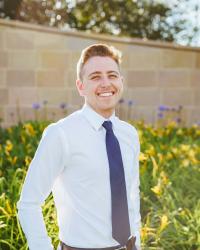
Biography
About Dr. Ryan DeCarsky:
Dr. DeCarsky is a white, queer, neurodivergent, cisgender man. He was born and raised in the Bay Area of California to a single mom in a multi-generational, working-class household. Ryan received my BA from the University of California, Santa Barbara, where he double-majored in Sociology and American Indian & Indigenous Studies and double-minored in History and Religious Studies. He later received his MA and PhD in Sociology from the University of Washington, Seattle. He also holds graduate certificates in Queer Sexuality Studies and Critical Disability Studies.
PhD Dissertation: Queering the Toolkit: Sexual Health in the Era of Biomedical Prevention (2026)
Committee: Dr. Sara Curran, Dr.Jelani Ince, Dr. Sasha Johfre, Dr. Steven M. Goodreau, Dr. Oliver Rollins (MIT)
Funded by: The American Sociological Association, The University of Washington's Civic Health Initiative, and the Department of Sociology
MA Thesis: Too Queer for the Deaf and too Deaf (or Disabled) for the Queers: Identity-Based Stigma and Resistance amongst Deaf-LGBTQ+ folk in the United States (2024)
MA Committee: Dr. Judith Howard (co-chair; Emerita), Dr. Heather D. Evans (co-chair), Dr. Julie Brines, Dr. Tristan Bridges
Funded by: The Harlan-Hahn Foundation and the Department of Sociology
How I approach Research: Research is a circular process in which actions and reflections influence each other. Research is also a huge privilege; it is an opportunity for me to be a resource, a facilitator, and, most importantly, a learner myself.I strive to practice research that is queer, decolonial, and participatory. For me, this means doing research that centers the communities I work with and actively challenges the systems that produce inequality and harm.
Research
Selected Research
- DeCarsky, R., Evans, H. D., Kaufman, H., Johnson, K., & Harniss, M. (2024). Trust, respect, and training: Principles of care for service professionals supporting adults with intellectual disabilities in community residential programs. Journal of Intellectual Disabilities, 0(0). https://doi.org/10.1177/17446295241276029
- DeCarsky, R., Harvey, P., & Johnston, S. W. (2022). Deaf Identity Salience: Tracing Daphne’s Deaf Identity Salience Through Switched at Birth. Culture & Psychology, 0(0). https://doi.org/10.1177/1354067X221117178
- DeCarsky, R. (2021). To Stay Gay, Boystown Becomes Less Queer. Contexts, 20(2), 70–71. https://doi.org/10.1177/15365042211012077
- DeCarsky, R. (2020). Book Review: The Mating Game: How Gender Still Shapes How We Date. Men and Masculinities, 25(1), 187–189. https://doi.org/10.1177/1097184X20953890
Courses Taught
Summer 2025
Spring 2004
Queering the Crip and Cripping the Queer
DIST ST. 430/530: Special Topics (Instructor of Record)
Spring 2023
DIS ST. 332 Disability and Society (Instructor of Record)
Summer 2021
LSJ 476: Miscarriages of Justice
Autumn 2021
DIST ST 230: Introduction to Disability Studies