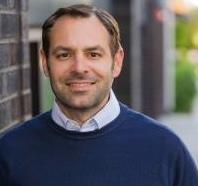
UW sociologist Zack Almquist was interviewed and quoted in a June 23, 2026 Seattle Times article, “King County finds 9% rise in homelessness since 2024.” Almquist told the paper that the amount of shelter in the region has not kept pace with the need, and has even declined since the last study period, leaving a higher number of people living outside.
The Point-in-Time (PIT) Count is a federally mandated count of people experiencing homelessness on a single night in late January. The U.S. Department of Housing and Urban Development requires every Continuum of Care, such as King County, Washington, to enumerate sheltered individuals each year and unsheltered individuals at least every other year, with results reported to HUD to inform federal funding and regional policy. The initial 2026 PIT Count found that on a given night in King County, an estimated 18,365 individuals experienced homelessness, 6,536 sheltered and 11,829 unsheltered, a 9 percent increase from 2024.[1] The count is only a snapshot of a much larger system: over a full year, the regional response serves thousands who exit homelessness into housing through shelter, Diversion, Rapid Re-Housing, Permanent Supportive Housing, and other interventions.
The Seattle Homelessness Count is a UW Department of Sociology project led by Professor Almquist with graduate students and UW partners. It develops and pilots new methods for counting unsheltered people experiencing homelessness, with particular attention to individuals who do not actively engage with services and are most likely to be missed by conventional enumeration. “It’s possible the region is showing a continued increase because its approach to estimating its homelessness is more accurate than many other places,” Almquist said. “Also, the sampling method reaches more people who live in encampments and remote areas that volunteers miss.”
In 2022, KCRHA sought to improve its procedures and began a collaboration with the University of Washington led by Almquist. As Principal Investigator heading the Social, Spatial, and Dynamic Analysis Lab, he and his team develop network-based methods, grounded in respondent-driven sampling, that improve the enumeration of those living unsheltered. The lab piloted new software for the procedure in 2023, updated it again in 2025, and helped run the 2024 and 2026 PIT Counts with KCRHA.
“We are not inventing homelessness that was not there,” Almquist said. “We are seeing more clearly a population that has long been undercounted.” Through this work, Professor Almquist and his team are helping the county turn sharper data into evidence for future shelter and housing policy.
The goal, Almquist says, is to give policymakers a clearer picture of who needs help, so decisions about shelter and housing rest on better data.
[1]King County Regional Homelessness Authority, 2026 Point-in-Time (PIT) Count Initial Report, June 23, 2026.