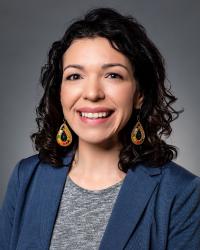
The Department of Sociology is pleased to announce Associate Professor Theresa Rocha Beardall has received the highly competitive William T. Grant Scholars Program Award. for her project, Who Decides What We Teach? Indian Boarding Schools and the Native Fight for Educational Justice in Washington State. Rocha Beardall was selected from a pool of 153 applicants nationwide, a recognition of both her established scholarship and the project's potential to transform how Native educational histories are researched and taught under the direction of Native nations.
“This year’s Scholars have proposed exciting projects that will surely push their research in new directions. We are proud to play a part in the career development of these Scholars and extend our support as they deepen their mentoring relationships, broaden their expertise, and propel research that can make a difference in the lives of young people,” said Senior Program Officer Melissa Wooten, who manages the program.
The William T. Grant Scholars Program supports career development for promising early-career faculty. The program funds five-year research and mentoring plans that expand researchers’ expertise in new disciplines, methods, and content areas. Applicants must be nominated by their institutions, and awards are based in part on applicants’ potential to become influential researchers. Rocha Beardall will receive $425,000 over five years and participate in annual mentoring retreats that build a supportive academic community, foster relationships with experts in areas of interest, and support research and professional development.
In 2015, Washington state mandated the Since Time Immemorial curriculum in all public schools to teach students about tribal sovereignty, historical injustices, and contemporary Native issues. Tribes are now developing community-driven content on their specific histories.
In 2025, for example, the Puyallup Tribe signed a memorandum of understanding with thirteen school districts to guide curriculum development on tribal culture and history. Alongside this MOU, the Puyallup Tribal Historic Preservation Department (THPD) is recovering Puyallup children's boarding school records held by outside institutions for over a century to reclaim tribal authority over their educational narrative.
With the Scholars award, Rocha Beardall will collaborate with THPD in a tribally governed research partnership. The Puyallup Tribe will determine the research priorities and approach, from questions and methods to data infrastructure and dissemination, while Rocha Beardall expands her methodological expertise in supervised machine learning and develops digital infrastructure to analyze boarding school records and support curriculum development.
To do so, she will receive mentorship from Corey Abramson, Associate Professor of Sociology at Rice University, integrating historical microdata with large-scale administrative records. Rocha Beardall will also receive mentorship from Tsianina Lomawaima, Professor Emerita at Arizona State University, in ethical curriculum development honoring Native practices.
"For too long, others have decided what counts as knowledge about Native nations in public education, often getting it wrong or leaving it out entirely. I'm thrilled to develop skills that support Native nations in reclaiming that authority and ensuring their data, stories, and knowledge systems shape what future generations learn in K-12 curriculum and beyond," Rocha Beardall said.
To learn more, go to the William T. Grant Foundation website.